Tampering with the Bible is supposed to be a huge taboo amongst Christians. The near-final words of the New Testament (in Revelation 22:18-19) present a grim warning against meddling with the Scriptures. And yet, as was seen in a previous post, at least some Bible translators have been guilty doing just that: ever-so-neatly changing the meaning of certain passages if and when they disagree with the translators’ pre-existing dogmas.
In the case of Luke and the story of the crucified bandit, you might recall, the villain was the Jehovah’s Witnesses New World Translation and one particularly mischievous comma. Today, though, we turn our attention to another Bible translation: the immensely popular New International Version.
If you were an evangelical Christian in the 1980s or 1990s, I can almost guarantee that you owned a New International Version (NIV) Bible. Intended as a popular-level replacement for the dated and unwieldy (and yet stubbornly persistent) King James Version (KJV), the NIV rocketed to prominence, dominating Bible sales for decades. In at least one instance, however, the NIV translation team chose to take certain ‘liberties’.
The text in question is that of 1 Peter, specifically the contentious section of 1 Peter 3:18-4:6. 1 Peter, written around AD 90, is part of a group of books that tend to make present-day Christians quite perplexed regarding the afterlife and the supernatural. I would also include Luke, Revelation, Jude, and 2 Peter in this ‘group’. (Of course, we’ve already looked at Luke’s endorsement of the abyss, as well as of immediate post-death consciousness — the issue that the New World Translation couldn’t tolerate).
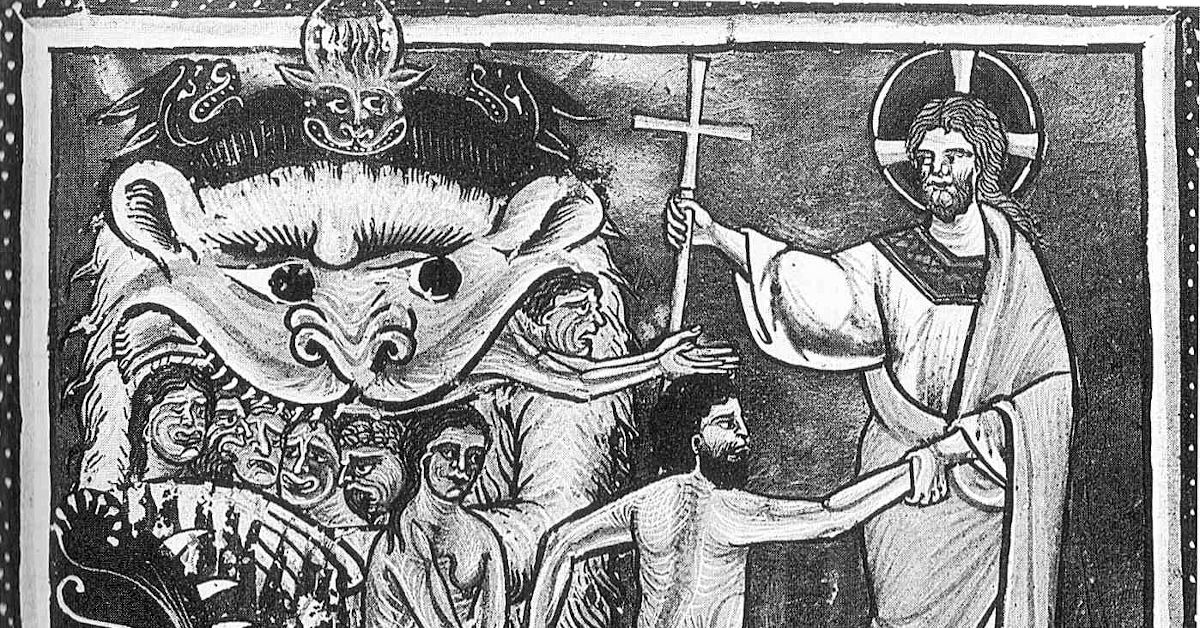
1 Peter 3:18-4:6 evokes similar concepts to Luke. The author of 1 Peter depicts a supernatural ‘prison’, where the previously disobedient and rebellious ‘spirits’ of dead humans are now contained. Nothing too out of the ordinary so far. Then, however, we’re hit with a curveball: Jesus, after his crucifixion, travels to this ‘prison’ and makes some sort of ‘proclamation’. In 1 Peter 4:6, we learn that this ‘proclamation’ is, in fact, ‘the gospel’. In other words, dead humans, who are imprisoned in some kind of supernatural ‘bad place’, are given a second chance!
Let me tell you — such a belief is utterly unacceptable within modern evangelicalism. Evangelical Christianity strictly holds that it is impossible for a person to be ‘saved’ after death. Notice, then, the translation choice made by the NIV team in 1 Peter 4:6 (versus, say, the NRSV):
For this is the reason the gospel was preached even to those who are now dead, so that they might be judged according to human standards in regard to the body, but live according to God in regard to the spirit. (NIV)
For this is the reason the gospel was proclaimed even to the dead, so that, though they had been judged in the flesh as everyone is judged, they might live in the spirit as God does. (NRSV)
The true intent of 1 Peter is that ‘the gospel’ was proclaimed by Jesus to currently dead human spirits in the ‘prison’ of the dead. With a barely noticeable flourish, however, the NIV removes this meaning entirely: instead, it acts as though the ‘proclamation of the gospel’ in 1 Peter 4:6 happened in the past, while these people were still alive. Hence, no need for any uncomfortable notions of post-death repentance. Very naughty indeed!
Six other modern versions of the Bible emulate the NIV’s erstwhile insertion of “now dead”: the Christian Standard Bible (CSB), the New Living Translation (NLT), the God’s Word Translation (GW), the New Century Version (NCV), the New International Reader’s Version (NIRV), and The Message (MSG). If nothing else, the CSB and the NLT at least have the courtesy to mention the correct reading as a footnote, which is always nice to include when playing fast-and-loose with the Scriptures.
This is a modified excerpt from my as-yet-unreleased book, Decoding Gehenna: Hell and the Afterlife in the West. Subscribe or Follow Me for updates and more sneak-peek excerpts!
